

Heart Valve Repair & Replacement
Heart valve repair and replacement in Turkey includes surgical and catheter-based treatments used to correct diseased heart valves. Treatment may be required when a valve becomes severely narrowed, leaks significantly, or causes symptoms and changes in heart function. The choice between valve repair and replacement depends on the affected valve, disease severity, anatomy, age, heart function, previous procedures, and overall cardiovascular health.

What Is Heart Valve Disease?
Heart valve disease occurs when one or more of the heart’s valves do not open or close normally. A narrowed valve is called stenotic. A leaking valve causes regurgitation, allowing blood to flow backward instead of moving efficiently through the heart. Valve disease can affect the aortic, mitral, tricuspid, or pulmonary valve. Symptoms may include shortness of breath, fatigue, chest discomfort, palpitations, dizziness, swelling, or reduced exercise capacity. Some patients remain asymptomatic during earlier stages and are diagnosed through echocardiography.
When Is Heart Valve Surgery Needed?
Valve intervention may be considered when disease becomes severe, causes symptoms, or begins affecting heart function.
Treatment can also be recommended before significant symptoms appear if imaging shows progressive enlargement or weakening of the heart.
The timing of intervention is important because advanced valve disease can lead to heart failure, rhythm disorders, pulmonary hypertension, or permanent cardiac damage.
Not every valve problem requires immediate surgery. Some patients can be monitored with regular imaging until treatment criteria are reached.
What Is Heart Valve Repair?
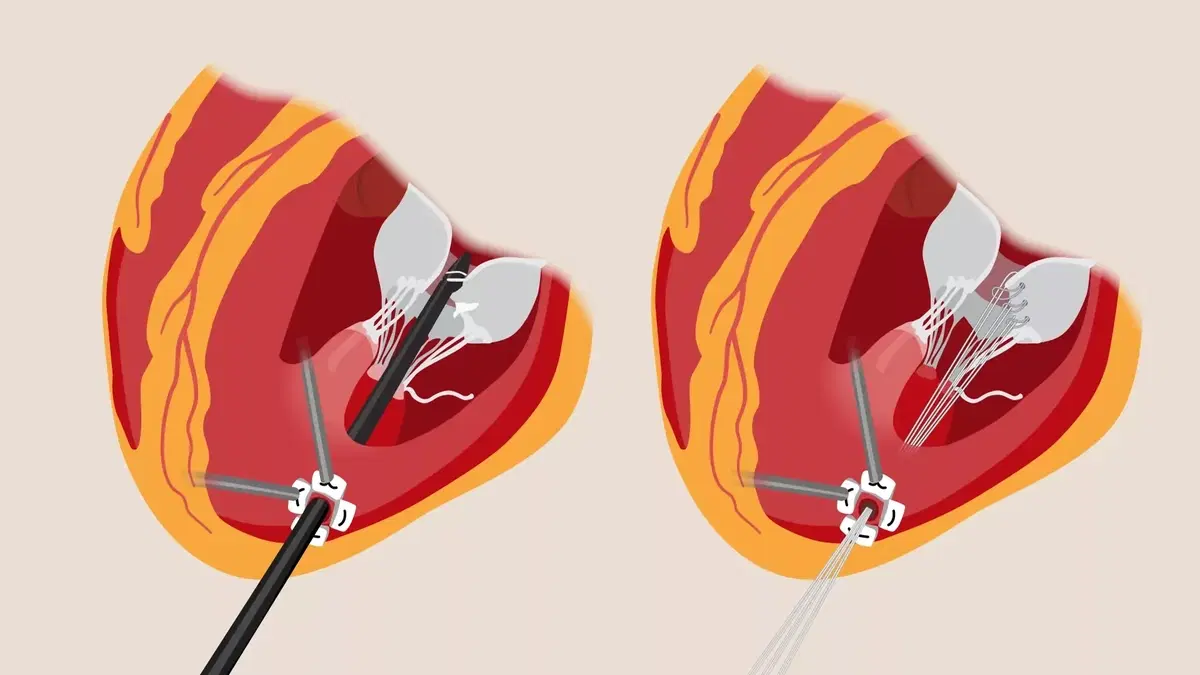
Heart valve repair preserves the patient’s own valve while correcting the structural problem.
Repair may involve reshaping valve tissue, correcting supporting structures, removing abnormal tissue, or reinforcing the valve with an annuloplasty ring.
Mitral valve repair is one of the most established applications.
Repair can preserve natural valve function and may reduce the need for lifelong anticoagulation compared with some replacement options.
However, repair is only appropriate when the valve anatomy allows a durable correction.
What Is Heart Valve Replacement?
Heart valve replacement removes or bypasses a severely damaged valve and replaces it with a prosthetic valve.
Replacement may be necessary when the valve is too calcified, damaged, or structurally abnormal to repair effectively.
The two main prosthetic categories are mechanical valves and biological valves.
Valve selection depends on age, expected durability, anticoagulation considerations, lifestyle, pregnancy plans, and the position of the affected valve.
Long-term follow-up remains necessary after either type of replacement.
What Is Mitral Valve Repair?
Mitral valve repair treats selected cases of mitral regurgitation while preserving the native valve.
The procedure can correct prolapsing leaflets, damaged chordae, or enlargement of the valve opening.
An annuloplasty ring is commonly used to stabilize the repaired valve.
Mitral repair may provide good functional results when valve anatomy is suitable.
Detailed echocardiography, particularly transesophageal echocardiography, helps define the mechanism of leakage before surgery and can also assess the quality of the repair during the operation.
What Is Aortic Valve Replacement?
Aortic valve replacement treats severe aortic stenosis or significant aortic regurgitation.
In conventional surgery, the diseased valve is removed and replaced with a mechanical or biological prosthesis.
Aortic stenosis is commonly associated with progressive calcification that restricts valve opening.
Severe disease can reduce blood flow from the heart and lead to breathlessness, chest pain, fainting, or heart failure.
Treatment selection depends on age, surgical risk, valve anatomy, and whether other cardiac procedures are required.
Mechanical Valve vs Biological Valve
Mechanical valves are manufactured from durable artificial materials and are designed for long-term use.
Their durability can make them appropriate for selected younger patients.
However, most mechanical valve recipients require long-term anticoagulation to reduce the risk of blood clots.
Biological valves are generally made from treated animal tissue.
They usually require less intensive long-term anticoagulation but may deteriorate over time.
Valve choice involves balancing durability, bleeding risk, age, lifestyle, and future treatment options.
What Is TAVI or TAVR?
Transcatheter Aortic Valve Implantation, also called TAVI or TAVR, replaces the aortic valve without conventional open-heart surgery.
A replacement valve is delivered through a catheter, often through an artery in the groin.
The new valve expands inside the diseased native valve and begins regulating blood flow.
TAVI is widely used for selected patients with severe aortic stenosis.
Suitability depends on valve anatomy, vascular access, age, surgical risk, and expected long-term outcomes.
Open surgery may remain preferable in other cases.
What Is Minimally Invasive Heart Valve Surgery?
Minimally invasive valve surgery uses smaller chest incisions than a traditional full sternotomy.
Selected mitral and aortic valve procedures can be performed through these approaches.
Potential benefits may include reduced chest wall trauma, smaller scars, and faster early recovery.
However, minimally invasive surgery is not suitable for every patient.
Complex valve anatomy, previous operations, aortic disease, or the need for simultaneous coronary bypass surgery may influence the surgical approach.
Complete and durable valve treatment remains the primary objective.
How Is Heart Valve Surgery Planned?
Planning usually includes echocardiography, ECG, blood testing, and cardiovascular risk assessment.
Transesophageal echocardiography may provide detailed images of valve anatomy.
CT imaging or coronary angiography can also be required depending on age, symptoms, and the planned intervention.
The team evaluates valve severity, heart chamber size, ventricular function, pulmonary pressures, coronary arteries, and other structural abnormalities.
These findings help determine whether repair, surgical replacement, or a transcatheter procedure is the most appropriate strategy.
What Happens During Open Heart Valve Surgery?
Traditional heart valve surgery is usually performed under general anesthesia through an incision in the chest.
A heart-lung machine may temporarily support circulation while the valve is repaired or replaced.
The surgeon accesses the affected valve, performs the planned correction, and checks valve function before completing the operation.
Some patients undergo additional procedures during the same surgery, such as coronary artery bypass grafting or repair of the ascending aorta.
Postoperative monitoring usually begins in an intensive care unit.
What Are the Risks of Valve Surgery?
Heart valve surgery carries risks associated with major cardiovascular procedures.
Possible complications include bleeding, infection, stroke, arrhythmia, blood clots, kidney dysfunction, respiratory problems, and complications related to anesthesia.
Valve-specific complications can include leakage around a prosthetic valve, structural deterioration, thrombosis, or recurrent regurgitation after repair.
Individual risk depends on age, heart function, kidney health, lung disease, previous operations, and the complexity of the planned procedure.
How Long Is Recovery After Heart Valve Surgery?
Recovery depends on the type of procedure and surgical approach.
After open surgery, patients may initially experience fatigue, chest discomfort, reduced appetite, and limited physical capacity.
Walking is gradually increased during recovery.
If the breastbone has been divided, lifting restrictions may remain in place while it heals.
Minimally invasive or transcatheter procedures may involve a shorter early recovery period in selected patients.
Return to normal activity should progress according to cardiovascular function and postoperative assessment.
What Medications Are Needed After Valve Replacement?
Medication requirements depend strongly on the type of valve and associated cardiovascular conditions.
Mechanical valve recipients generally require long-term anticoagulation.
Biological valve recipients may require antiplatelet or anticoagulant treatment for a defined period depending on the clinical situation.
Additional medications may be used for blood pressure, heart rhythm, heart failure, or cholesterol management.
Regular monitoring is particularly important for patients taking anticoagulants because inadequate or excessive treatment can increase clotting or bleeding risk.
How Long Do Replacement Heart Valves Last?
Valve durability depends on the type of prosthesis.
Mechanical valves are designed for long-term durability and can function for many years.
Biological valves have a limited structural lifespan because tissue degeneration can occur gradually.
Durability can vary according to patient age, valve position, calcium metabolism, and other biological factors.
Some deteriorating biological valves may later be treated with another surgical procedure or a transcatheter valve-in-valve intervention in selected cases.
What Follow-Up Is Needed After Valve Treatment?
Long-term follow-up usually includes clinical examinations and periodic echocardiography.
Monitoring evaluates valve function, heart chamber size, ventricular performance, rhythm, and symptoms.
Patients with prosthetic valves also require assessment for thrombosis, structural deterioration, infection, or leakage.
Anticoagulation monitoring is essential for many mechanical valve recipients.
Patients should also maintain good dental and general infection prevention practices because certain valve conditions can increase the clinical significance of infective endocarditis.
Heart Valve Repair & Replacement in Turkey for International Patients
International patients considering heart valve repair or replacement in Turkey should provide complete cardiovascular records before treatment planning.
Useful documents may include echocardiography images, transesophageal echocardiography reports, coronary angiography, CT scans, ECG results, previous cardiac surgery records, and medication lists.
Travel plans should include adequate time for preoperative evaluation, treatment, early recovery, and postoperative review.
Heart valve repair and replacement in Turkey can include surgical repair, mechanical or biological valve replacement, minimally invasive surgery, and selected transcatheter procedures. Accurate valve assessment, appropriate procedure selection, careful postoperative monitoring, and structured long-term cardiology follow-up remain central to treatment quality.

You can send us messages regarding your appointments and requests.
 Send Message