

Dental Implants
Dental implants in Turkey are fixed tooth replacement systems used to restore missing teeth by supporting crowns, bridges, or full-arch restorations. An implant is usually placed into the jawbone and allowed to integrate before the final prosthetic tooth is attached. Treatment planning considers bone volume, gum health, bite forces, missing-tooth location, medical history, and long-term oral hygiene.

What Are Dental Implants?
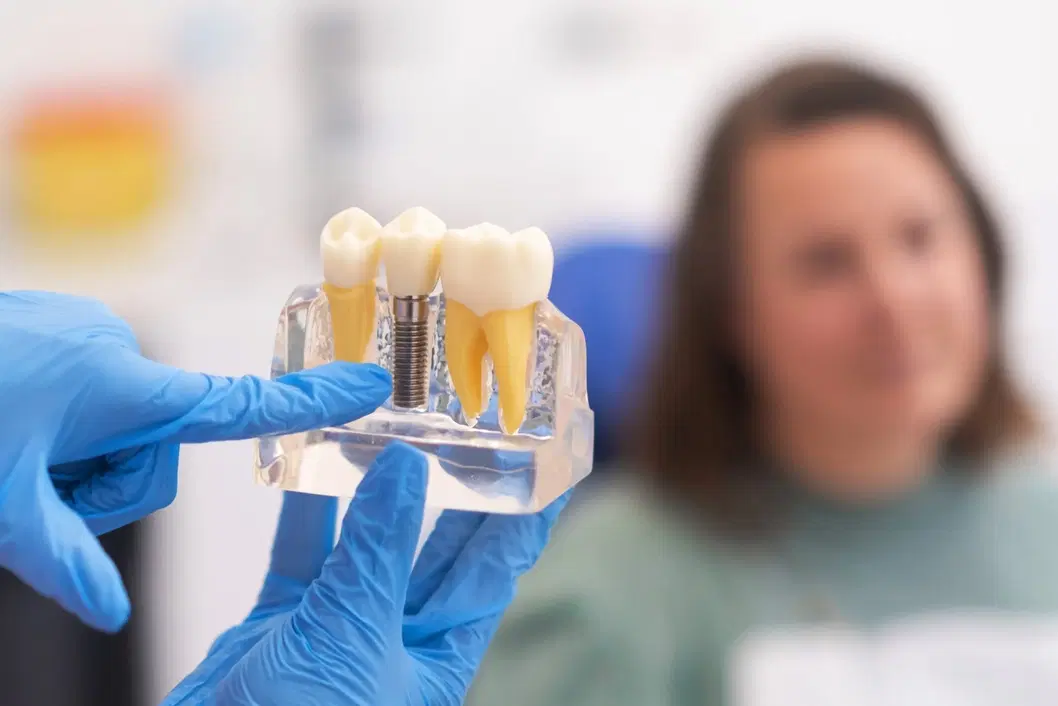
Dental implants are artificial tooth roots placed into the jawbone to support dental restorations. Most contemporary implants are manufactured from titanium or titanium-based materials. An implant does not replace the visible tooth by itself. It functions as a foundation for a crown, bridge, or larger prosthetic restoration. The complete system generally includes the implant fixture, an abutment, and the final prosthetic tooth. Implant treatment can replace one missing tooth, several teeth, or an entire dental arch when adequate anatomical support is available.
How Do Dental Implants Work?
Dental implants work by creating a stable connection between the implant surface and surrounding jawbone. This biological process is called osseointegration.
After placement, bone gradually forms around the implant surface. The implant becomes stable enough to support chewing forces after sufficient healing.
The time required for integration varies according to bone quality, implant location, surgical technique, and individual healing response.
Once stability is confirmed, the restorative stage begins. A crown, bridge, or full-arch prosthesis can then be connected to the implant system.
Who May Be Suitable for Dental Implants?
Dental implants may be suitable for adults missing one or more teeth who have adequate bone and healthy surrounding tissues. Overall medical condition also matters.
Patients with active gum disease, uncontrolled infection, or insufficient bone may require additional treatment before implant placement.
Smoking, certain medications, systemic conditions, previous radiotherapy, and oral hygiene can influence healing and implant prognosis.
Age alone does not usually determine suitability in adults. Bone development, medical history, anatomy, and ability to maintain oral hygiene are more relevant factors.
What Happens During Dental Implant Treatment?
Dental implant treatment begins with examination of the mouth, gums, remaining teeth, and bite. Dental imaging is used to assess bone dimensions and anatomical structures.
During surgery, the implant site is prepared within the jawbone. The implant fixture is then inserted according to the planned position.
The gum may be closed over the implant or a healing component may remain visible.
After healing, the restorative stage begins. The implant position is recorded digitally or with an impression before the final prosthetic tooth is produced.
How Long Does Dental Implant Treatment Take?
Dental implant treatment can take several months when healing is required between implant placement and final restoration. The timeline depends on the individual case.
Osseointegration commonly forms the longest stage of treatment. Bone grafting, sinus lifting, or other preparatory procedures can extend the overall timeline.
Some patients may receive temporary restorations during healing.
Immediate-loading protocols are possible in selected cases, but they are not suitable for every implant site. Primary implant stability and bite conditions are important when considering early loading.
What Is Osseointegration?
Osseointegration is the process through which living bone forms a stable connection with the dental implant surface. It is essential for long-term implant support.
During this period, the implant should remain sufficiently stable while surrounding bone remodels. Excessive movement can interfere with successful integration.
The process is influenced by bone quality, surgical technique, implant stability, systemic health, smoking, and loading forces.
A stable implant can later function as an anchor for the final dental restoration.
Is Bone Grafting Necessary Before Dental Implants?
Bone grafting may be necessary when the jaw does not provide enough volume to support an implant in the planned position. Not every patient requires grafting.
Bone loss can develop after tooth extraction, gum disease, infection, trauma, or prolonged tooth absence.
Grafting procedures aim to increase bone volume or improve the shape of the implant site. The graft may be performed before or during implant placement.
The required technique depends on the amount and location of missing bone.
What Is a Sinus Lift?
A sinus lift is a bone augmentation procedure used in selected areas of the upper back jaw. It creates additional space for implant-supporting bone beneath the maxillary sinus.
The procedure may be considered when natural bone height is insufficient for stable implant placement.
Bone graft material is positioned beneath the elevated sinus membrane. Implant placement may occur simultaneously or after a separate healing period.
The decision depends on remaining bone height, implant stability, sinus anatomy, and the extent of augmentation required.
Can Dental Implants Replace a Single Tooth?
A single dental implant can replace one missing tooth without requiring support from neighboring teeth. A crown is attached to the implant after healing.
This approach differs from a conventional bridge, which typically uses adjacent teeth for support.
Single-tooth implant treatment requires sufficient space, bone volume, and healthy surrounding tissues.
Implant position is especially important in visible areas because gum shape, crown proportions, and neighboring teeth influence the final appearance.
Can Several Missing Teeth Be Replaced With Implants?
Several missing teeth can often be restored using an implant-supported bridge. It is not always necessary to place one implant for every missing tooth.
The number and position of implants depend on the length of the missing-tooth area, bone quality, bite forces, and prosthetic design.
Strategic implant placement can provide support while reducing unnecessary surgery.
The final restoration should distribute chewing forces appropriately and allow effective cleaning around implants and supporting tissues.
What Are Full-Arch Dental Implants?
Full-arch implant treatment replaces most or all teeth in one jaw using several implants that support a fixed or removable prosthesis.
The number of implants varies according to anatomy, bone availability, prosthetic design, and treatment concept.
Full-arch treatment may be considered when many teeth are missing or cannot be predictably restored.
Planning requires detailed assessment of bite height, jaw relationships, speech, smile line, bone support, and prosthetic space.
Temporary fixed teeth may be possible during healing in selected cases.
What Is Immediate Implant Placement?
Immediate implant placement means inserting a dental implant during the same appointment as tooth extraction. It can reduce the number of surgical stages in suitable cases.
However, immediate placement requires appropriate bone conditions and control of infection. The extraction socket must also allow stable implant positioning.
Immediate placement does not always mean the final crown is fitted immediately.
Implant placement timing and restoration timing are separate decisions that depend on stability, anatomy, and loading conditions.
Is Dental Implant Surgery Painful?
Dental implant placement is commonly performed under local anesthesia, which limits pain during the surgical procedure. Sedation may also be considered in selected situations.
After surgery, temporary tenderness, swelling, or bruising can occur. The level of discomfort depends on surgical extent and whether bone grafting was performed.
Postoperative symptoms usually change gradually during healing.
Increasing pain, persistent swelling, fever, or other unusual symptoms should be assessed because they may indicate a complication requiring attention.
What Are the Risks of Dental Implants?
Dental implant treatment carries potential risks including infection, bleeding, implant failure, gum recession, bone loss, nerve injury, and sinus-related complications.
An implant may fail to integrate with the bone during early healing. Problems can also develop later because of excessive bite forces or inflammation around the implant.
Peri-implantitis is an inflammatory condition affecting tissues around implants and can contribute to progressive bone loss.
Long-term success therefore depends on both surgical treatment and continued maintenance.
How Long Do Dental Implants Last?
Dental implants can function for many years, but no implant should be considered maintenance-free or guaranteed for life.
Longevity depends on bone support, gum health, oral hygiene, smoking, bite forces, systemic health, and regular dental monitoring.
The implant fixture and the attached crown or bridge do not necessarily have the same lifespan. Prosthetic components may require repair or replacement earlier.
Daily cleaning and professional examinations remain important even when implants feel stable and comfortable.
How Should Dental Implants Be Maintained?
Dental implants require regular cleaning because plaque can accumulate around implant-supported restorations. Brushing and interdental cleaning remain essential.
Special floss, interdental brushes, or other cleaning tools may be needed depending on the prosthetic design.
Professional dental examinations help monitor gum health, bone levels, bite forces, and restoration condition.
Patients with full-arch implant restorations may require specific cleaning techniques beneath the prosthesis.
Implants cannot develop tooth decay, but the surrounding gum and bone can still develop inflammatory disease.
Dental Implants in Turkey for International Patients
International patients considering dental implants in Turkey should understand whether treatment requires one visit or several stages. Implant placement and final prosthetic restoration may occur months apart.
Travel planning should account for examination, surgery, healing, restorative appointments, and possible bone augmentation.
Patients should also receive clear information about implant specifications, prosthetic materials, temporary teeth, follow-up, and long-term maintenance.
Dental implants in Turkey can replace single, multiple, or full-arch missing teeth through fixed implant-supported restorations. Accurate imaging, stable implant placement, healthy surrounding tissues, appropriate prosthetic planning, and continued oral hygiene remain central to long-term treatment.

You can send us messages regarding your appointments and requests.
 Send Message