

Aortic Aneurysm Surgery
Aortic aneurysm surgery in Turkey includes open and endovascular procedures used to repair an abnormally enlarged section of the aorta when the risk of rupture or other complications becomes clinically significant. Treatment may involve surgical graft replacement, Endovascular Aneurysm Repair (EVAR), or Thoracic Endovascular Aortic Repair (TEVAR). Planning depends on aneurysm size, location, growth rate, symptoms, anatomy, and the patient’s cardiovascular health.

What Is an Aortic Aneurysm?
An aortic aneurysm is an abnormal enlargement or bulging of a weakened section of the aortic wall. The aorta is the body’s largest artery and carries blood from the heart to the chest, abdomen, and other organs. Aneurysms can gradually enlarge without causing noticeable symptoms. As their diameter increases, the risk of rupture or other complications may also increase. Treatment ranges from regular imaging surveillance to surgical repair depending on aneurysm characteristics and individual risk.
What Types of Aortic Aneurysms Are There?
Aortic aneurysms are generally classified according to their anatomical location.
An abdominal aortic aneurysm, or AAA, develops in the portion of the aorta passing through the abdomen.
A thoracic aortic aneurysm develops within the chest and may involve the ascending aorta, aortic arch, or descending thoracic aorta.
Some aneurysms extend across both the chest and abdomen and are described as thoracoabdominal aortic aneurysms.
Location significantly influences treatment options and surgical complexity.
What Causes an Aortic Aneurysm?
Aortic aneurysms can develop when structural changes weaken the arterial wall.
Important risk factors include increasing age, smoking, hypertension, atherosclerosis, and family history of aortic disease.
Certain inherited connective tissue conditions can also increase risk.
A bicuspid aortic valve may be associated with enlargement of the ascending aorta in some patients.
Because several mechanisms can cause aneurysm formation, assessment may include both cardiovascular risk evaluation and investigation of underlying aortic disease.
When Is Aortic Aneurysm Surgery Needed?
Surgery may be considered when an aneurysm reaches a diameter associated with increased complication risk.
Size thresholds vary according to aneurysm location, body size, underlying disease, and other clinical factors.
Rapid growth can also influence the decision to operate.
Symptoms such as persistent chest, abdominal, or back pain may require more urgent assessment.
Surgery can sometimes be recommended at smaller diameters when patients have certain genetic aortic disorders, associated valve disease, or other features that increase the risk of dissection or rupture.
How Is an Aortic Aneurysm Diagnosed?
Many aortic aneurysms are discovered incidentally during imaging performed for another reason.
Ultrasound is commonly used to detect and monitor abdominal aortic aneurysms.
CT angiography provides detailed information about aneurysm diameter, length, branches, and surrounding anatomy.
MRI can provide additional vascular information in selected patients.
Echocardiography is particularly useful for evaluating the aortic root and ascending aorta.
Accurate measurements are important because changes in aneurysm size can influence treatment timing.
What Is Open Aortic Aneurysm Repair?
Open aneurysm repair replaces or reinforces the diseased section of the aorta using a synthetic vascular graft.
For abdominal aneurysms, the surgeon accesses the aorta through an abdominal incision.
Thoracic aneurysm surgery may require access through the chest and can involve cardiopulmonary bypass depending on the aneurysm location.
The abnormal segment is repaired so blood can travel through the graft instead of placing pressure on the weakened vessel wall.
Open repair is a major cardiovascular operation requiring structured postoperative monitoring.
What Is EVAR?
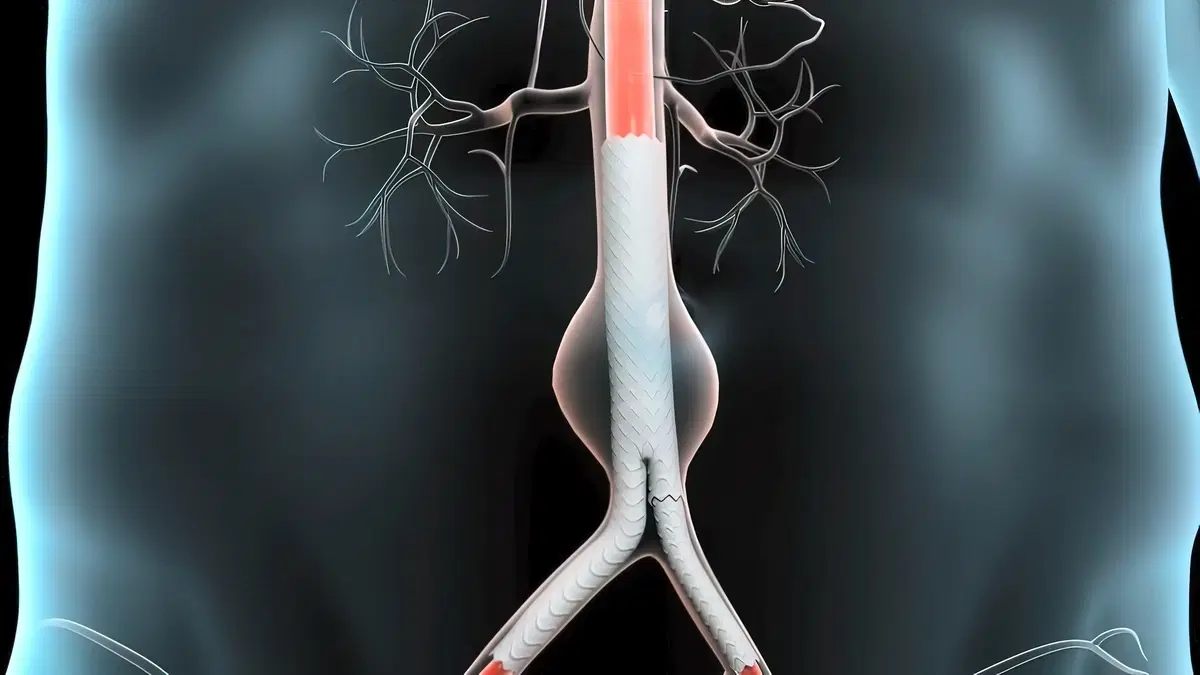
Endovascular Aneurysm Repair, or EVAR, is a minimally invasive treatment primarily used for selected abdominal aortic aneurysms.
A stent graft is introduced through arteries, commonly from the groin, and guided into the aorta.
The graft is positioned inside the aneurysm to create a new pathway for blood flow.
This reduces pressure on the weakened aneurysm wall.
EVAR avoids a large abdominal incision, but it requires suitable vascular anatomy.
Patients also need long-term imaging because complications such as endoleaks or graft movement can occur.
What Is TEVAR?
Thoracic Endovascular Aortic Repair, or TEVAR, uses a stent graft to treat selected conditions involving the descending thoracic aorta.
The graft is delivered through the vascular system and positioned across the diseased segment.
TEVAR can be used for selected thoracic aneurysms and other aortic conditions when the anatomy is appropriate.
Because major branches arise from the thoracic aorta, detailed CT angiography is essential before treatment.
Some complex cases may require additional vascular procedures to maintain blood flow to important branches.
EVAR vs Open Aortic Aneurysm Surgery
EVAR and open repair use different approaches to isolate the aneurysm from normal blood pressure.
EVAR generally involves smaller incisions and can provide a shorter early recovery in suitable patients.
Open surgery is more invasive but may provide a durable solution without some of the device-related surveillance requirements associated with EVAR.
Anatomy is a major factor in choosing between them.
The location of arterial branches, shape of the aneurysm, available landing zones, vessel diameter, age, and operative risk all influence treatment selection.
What Is Ascending Aortic Aneurysm Surgery?
Ascending aortic aneurysm surgery usually requires an open surgical approach.
The enlarged section of the ascending aorta is replaced with a synthetic graft.
If the aneurysm involves the aortic root, treatment may also require repair or replacement of the aortic valve.
In selected cases, the patient’s own valve can be preserved through valve-sparing aortic root surgery.
The exact operation depends on the relationship between the aneurysm, aortic root, coronary arteries, and heart valve.
What Happens if an Aortic Aneurysm Ruptures?
A ruptured aortic aneurysm is a life-threatening medical emergency.
Rupture causes internal bleeding that can rapidly lead to severe blood pressure loss, organ failure, and death.
Symptoms may include sudden severe chest, abdominal, or back pain, weakness, dizziness, or loss of consciousness.
Emergency open or endovascular repair may be required depending on aneurysm location and available anatomy.
Planned treatment of high-risk aneurysms generally carries a different risk profile from emergency surgery after rupture.
What Is an Endoleak After EVAR?
An endoleak occurs when blood continues flowing into the aneurysm sac after endovascular repair.
Different types of endoleaks have different causes and clinical significance.
Some may resolve without intervention, while others require additional treatment because pressure remains within the aneurysm.
CT angiography, ultrasound, or other imaging methods can be used for surveillance.
This is one reason long-term imaging remains important after EVAR even when the patient has no symptoms.
What Are the Risks of Aortic Aneurysm Surgery?
Aortic aneurysm repair carries risks associated with major vascular intervention.
Possible complications include bleeding, infection, heart attack, stroke, kidney injury, blood clots, respiratory problems, and reduced blood flow to organs or limbs.
Complex thoracic or thoracoabdominal procedures can also involve neurological complications.
Endovascular repair has additional device-related risks, including endoleak, graft migration, or the need for another intervention.
Individual risk depends on aneurysm anatomy, procedure type, age, cardiovascular health, and whether treatment is planned or emergency.
How Long Is Recovery After Aortic Aneurysm Surgery?
Recovery varies considerably between open and endovascular procedures.
Open repair usually requires a longer hospital stay and recovery period because of the larger surgical incision and physiological stress.
Patients gradually increase walking and normal daily activities after discharge.
EVAR and TEVAR often allow faster early mobilization in uncomplicated cases.
However, a shorter initial recovery does not remove the need for follow-up.
Blood pressure management, wound or access-site care, medication, and imaging surveillance remain important after treatment.
What Follow-Up Is Needed After Aortic Aneurysm Repair?
Follow-up monitors the repaired aorta and identifies new or recurring vascular problems.
Patients treated with EVAR or TEVAR require periodic imaging to assess the stent graft, aneurysm sac, and possible endoleaks.
After open repair, surveillance may still be necessary because other sections of the aorta can enlarge over time.
Blood pressure control and smoking cessation are particularly important for reducing additional vascular risk.
Patients with inherited aortic conditions may require lifelong imaging of multiple aortic segments.
Aortic Aneurysm Surgery in Turkey for International Patients
International patients considering aortic aneurysm surgery in Turkey should provide complete cardiovascular imaging and medical records before treatment planning.
Useful documents may include CT angiography images, ultrasound reports, echocardiography, previous vascular procedures, laboratory results, and current medications.
Treatment planning should clarify whether open repair, EVAR, TEVAR, or a more complex aortic reconstruction is appropriate.
Travel should allow sufficient time for preoperative assessment, treatment, early recovery, and postoperative evaluation.
Aortic aneurysm surgery in Turkey can include open graft replacement and endovascular repair for selected abdominal and thoracic aneurysms. Accurate imaging, appropriate intervention timing, careful technique selection, cardiovascular risk management, and long-term surveillance remain central to aortic care.

You can send us messages regarding your appointments and requests.
 Send Message